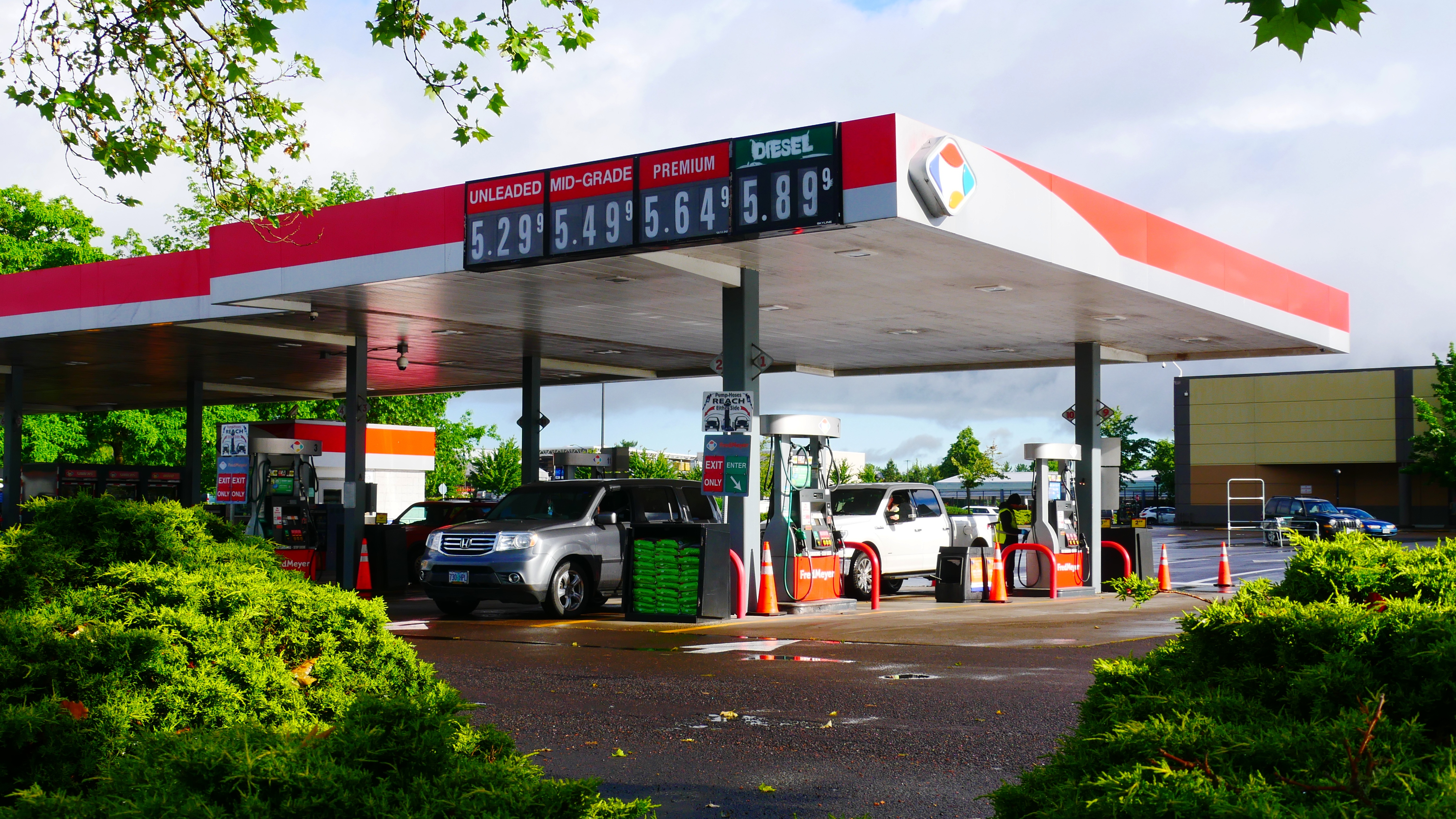
Diesel fuel hit a record national average of $5.85 per gallon Friday, Sept. 4. Small-business owners near Wesley Chapel say the cost is unsustainable.
Local landscaper says fuel costs are "killing" the business
Shawn Boyer, a Lutz landscaping business owner who depends on diesel, told Tampa Bay 28 he and his brother are each spending about $3,000 a month on fuel and related expenses. Boyer said he has absorbed the higher costs so far to avoid raising prices on customers, but that will likely change heading into 2027.
"It's killing us. The bottom line, it's killing us," Boyer said.
At a Lutz gas station just south of Wesley Chapel, regular gas was $3.79 per gallon and diesel was $5.69 Friday, according to Tampa Bay 28 reporter Annette Gutierrez. Both sit slightly below the national averages.
Iran conflict disrupts oil supply, driving prices higher
The price spike traces directly to the war with Iran. Since the U.S. and Israel launched military operations in late February, the conflict has disrupted tanker traffic through the Strait of Hormuz, a chokepoint that normally carries about a fifth of the world's oil, The New York Times reported. Brent crude oil climbed from roughly $70 a barrel before the war to more than $95 Friday, according to WTSP. The national diesel average was about $3.76 before the conflict began, according to AAA.
Aaron Wood, associate professor of economics at the University of Tampa, told Tampa Bay 28 that the Strait of Hormuz disruption is keeping oil prices elevated. Wood said anything requiring diesel to reach market will create inflationary pressure for consumers.
Florida drivers paying well above last year's rates
Florida drivers are paying about $3.89 per gallon for regular gas, according to the American Automobile Association (AAA). That is 81 cents more than the $3.08 average at the same point in 2025, Florida Politics reported. The national average for regular gas, $4.14, is 30 cents above the previous Labor Day record of $3.82, set in 2012.
Grocery bills and school budgets feel the pinch
The diesel surge ripples well beyond the pump. Fuel accounts for roughly 15% to 30% of the total cost of food, according to the Independent Grocers Alliance. David Ortega, professor of food economics and policy at Michigan State University, said in an Associated Press report that U.S. grocery prices were up 2.7% in July compared with a year earlier. Seafood prices rose 7% and fresh fruit climbed 4.9% over the same period.
About 90% of the nation's 500,000 school buses run on diesel, and rising costs have stretched district budgets as the school year begins, WUSF reported. Harvest season adds more demand: 75% of agricultural equipment runs on diesel, according to the Engine Technology Forum.
Shippers pass costs along as holidays approach
Shipping costs are climbing too. Amazon added a temporary 3.5% fuel and logistics surcharge on some third-party sellers in April. UPS, FedEx and the U.S. Postal Service have also tacked on fees citing rising fuel costs, according to AP.
Danny Reyes, a Lutz driver, told Tampa Bay 28 the financial strain will only deepen as the holidays approach. Boyer said he plans to get through the winter before raising his rates. No timeline for relief is in sight as long as the Iran conflict continues.





.jpg)