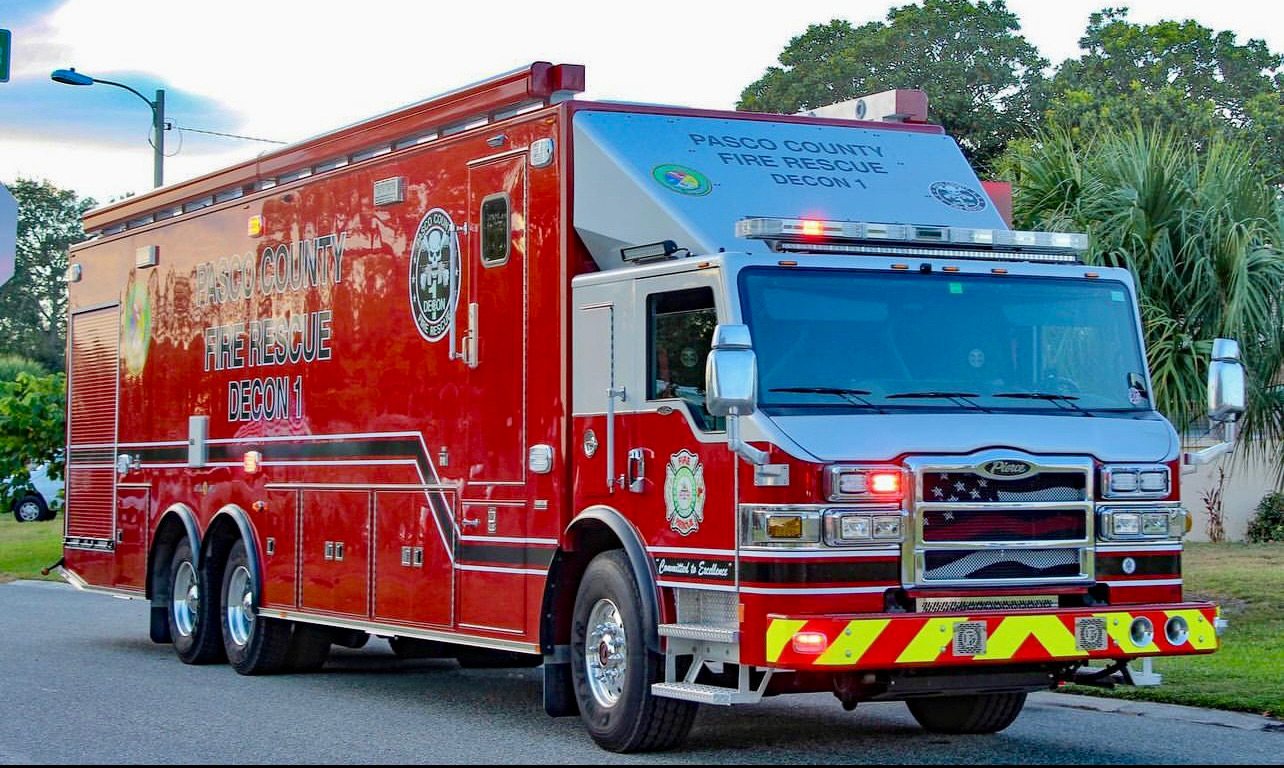
An aftermarket e-bike battery that didn't fit its bike caught fire and destroyed a New Port Richey home on Sept. 16, killing the family's dog and displacing six people.
Pasco County Fire Rescue said its A-Shift crews responded that morning to the 4000 block of Grouper Lane and found heavy flames and smoke pouring from the house. Crews brought the fire under control, but the home was a total loss.
The Grouper Lane fire is at least the third Pasco County incident this year linked to lithium-ion batteries. E-bikes are common across the county, including in Wesley Chapel, and aftermarket batteries are frequently sold online as cheaper replacements, according to the Pasco County Community Website.
Investigators trace fire to a mismatched battery
The agency's investigation, posted on X on Sept. 18, traced the cause to a lithium-ion battery a resident had recently purchased separately from an e-bike. After charging the battery, the resident found it did not fit the bike and disconnected it. A short time later, the resident discovered the battery "venting flame," the term fire investigators use for a lithium-ion cell releasing gas and heat just before it ignites.
Family of six escapes; Red Cross assists
Four adults and two children escaped the fire. The American Red Cross is assisting them.
One dog died.
Battery fires recur across Pasco County
In July, a Zephyrhills house fire that killed a man may have been battery-related, Tampa Bay 28 reported. Deputy Fire Chief Shawn Whited said at the time that "lithium-ion batteries have a tendency to rapidly expand and explode." On Aug. 31, a lithium-ion battery in a shed caused a fire that destroyed a Zephyrhills mobile home and displaced a couple, Tampa Bay 28 also reported.
Fire officials have not released the residents' names or identified the brand of the aftermarket battery. No information on damage to neighboring properties has been released.
Pasco County Fire Rescue urged residents to use only manufacturer-approved batteries and to avoid aftermarket or off-brand replacements. The agency directed residents to the National Fire Protection Association's website, nfpa.org, for additional lithium-ion battery safety tips.

.jpg)